Most Ministers have not yet agreed their spending allocations for next year with Minister for Public Expenditure Jack Chambers after a series of bruising budget meetings in recent days.
Negotiations are said to be exceptionally difficult as Chambers struggles to limit spending increases to 6 per cent across the board, with Ministers and senior officials privately complaining bitterly about their treatment in recent days.
Speaking on condition of anonymity in order to discuss sensitive issues, several people who have been involved in the process have described their meetings with the Department of Public Expenditure as “rough”, “robust”, “brusque” and, in one case, “literally unbelievable”.
“Everyone is getting a kicking,” said one source.
READ MORE


Some meetings are understood to have been very short, with spending departments asked to go away and moderate their budget requests and come back with lower bids. Several Ministers bridled at their treatment.
[ Budget Q&A: Submit your questions to our expert panel on budget dayOpens in new window ]
Departments have been asked to find savings in their own budgets to pay for proposed new spending measures. At one point, cuts to the overseas development aid budget were said to have been mooted, which were strongly resisted by the Department of Foreign Affairs.
Only a minority of departments have agreed their budgets at this stage. Several big-spending departments were still up in the air, including the Departments of Children, Agriculture, Transport, Social Protection, Education, Housing, Justice, Foreign Affairs, Further and Higher Education, Health and Culture.
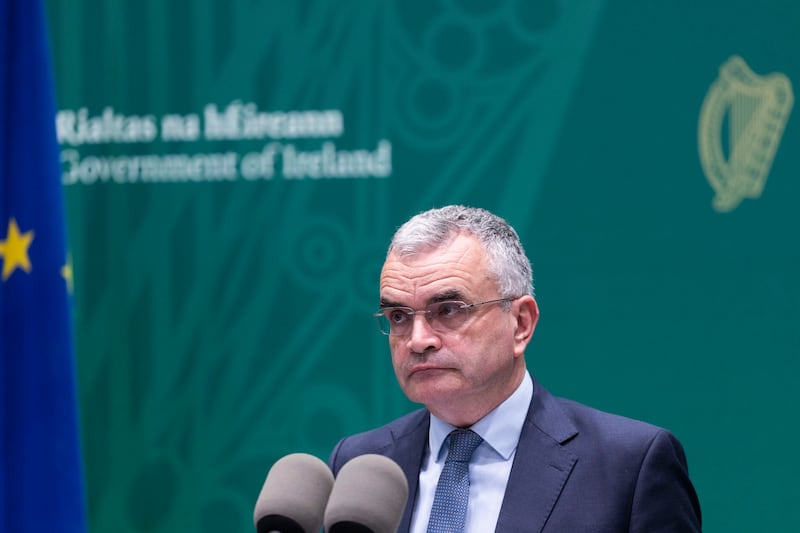
In talks on Thursday, Minister for Social Protection Dara Calleary was pushing for a €10 increase in core welfare rates, with an initially mooted €7.50 increase seen as risking political blowback.
It is understood a lump-sum payment for fuel-allowance recipients was among the options discussed, along with a permanent €5 increase to the weekly rate – although a senior figure said just one would be approved.
Coalition figures blamed overspends in the HSE and Department of Education, along with spending on cost-of-living interventions, for the “tight” negotiations.
Chambers is struggling to impose an increase of 6 per cent on spending across the board after years of much higher increases. The Cabinet backed the 6 per cent ceiling on spending increases during the summer, but most Ministers have come back with requests for higher increases, some substantially higher.
A source familiar with thinking in the Department of Public Expenditure stressed the 6 per cent limit was a decision of the Cabinet and would be achieved.
Budget meetings continue today and over the weekend in advance of Tuesday’s budget, with negotiations expected to go into Monday.
The Department of Finance will announce the exchequer returns for September today, while later tonight the pre-budget white paper will be published, which will give an estimate of tax receipts for the full year. If these show a further increase in projected corporation tax receipts, it will pile pressure on for further spending in the budget.
Opposition parties unveiled their alternative budgets yesterday, with all proposing significant increases in tax and spending.
Sinn Féin proposed a package of more than €13 billion between tax and spending measures, considerably more than the €8.5 billion package due to be unveiled by the Government next week.
The party said it would raise taxes on higher earners, developers, landlords and banks to generate revenue to fund their proposals to pay for a €500 “everyday essentials card” for one million lower-income households, a €400 electricity credit, the abolition of the universal social charge for workers on the first €40,000 they earn, €10-a-day childcare this year and a new tier of child benefit for those at greatest risk of poverty.